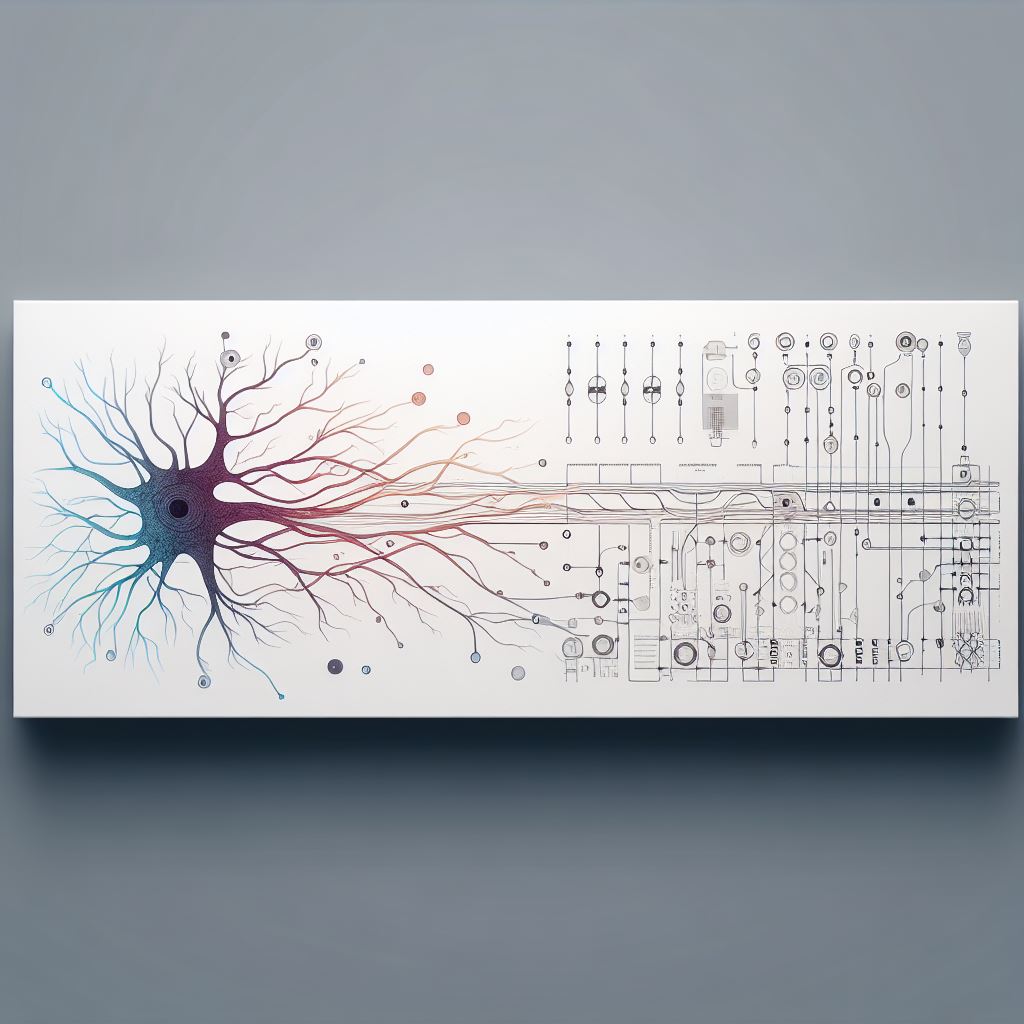
Should we cross paths, this is probably one of the faces I’ll be wearing.
Nima Dehghani
I am a physicist and computational neuroscientist at MIT working at the intersection of neural dynamics, complex systems, biological computation, and NeuroAI. My N⁴ studies how (biological & neural) neural systems compute across scales — from cortical microcircuits to coarse-grained representations in deep networks, to recurrent dynamics and reservoir computation — along four braided axes: NeuroPhysics, NeuroComputation, NeuroDynamics, and the encompassing surface, NeuroAI.
And yes, the rumors are true: I trained in medicine before defecting to physics and neural dynamics. I now diagnose neural circuits for fun—please don’t come to me for medical advice.
The driving force of my work is a simple but difficult question:
How do neural and biological systems compute as physical systems?
This question has led me across several connected scales. At the neurophysiological scale, I study cortical dynamics using human and animal electrophysiology: sleep rhythms, K-complexes, spindles, field potentials, excitation/inhibition balance, seizures, and the biophysics of extracellular signals. At the theoretical scale, I use ideas from statistical physics, dynamical systems, information theory, and network science to ask how collective neural activity forms stable patterns, transitions between states, and supports computation. At the computational scale, I am interested in how these biological principles can inform new forms of artificial intelligence, especially systems whose intelligence is grounded in dynamics, physical constraints, and compositional organization rather than only parameter optimization.
A recurring theme in my work is that the brain should not be treated merely as an information-processing metaphor. It is a physical system: extended in space, structured across scales, constrained by biophysics, and organized through collective dynamics. Computation, in this view, is not something imposed on the system from outside. It is something realized through the evolution of the dynamics of the system itself.
The N⁴ framework
This site organizes my work through four connected faces:
NeuroPhysics
The physics of cortical activity: field potentials, extracellular media, excitation/inhibition balance, sleep-wake dynamics, criticality, synchrony, and collective neural states.
NeuroComputation
The computational principles that emerge from neural systems: information flow, coarse-graining, state-dependent computation, thalamocortical control, and biological forms of representation.
NeuroDynamics
The temporal grammar of neural systems: oscillations, transients, waves, avalanches, spindles, K-complexes, seizures, and transitions between functional states.
NeuroAI
The attempt to bring these principles into artificial intelligence: biologically inspired architectures, physical computation, compositional systems, and models that learn through dynamics rather than only through weight updates.
These are not four separate fields. They are four views of the same problem: how matter, dynamics, and organization give rise to computation.
What this site is (and is not)
This website is not meant to be only a CV. It is a map of an intellectual program.
The Paper Maze holds the discrete rooms each containing the individual papers, preprints, code companions. The Blog gives longer companion essays for specific papers. The Idea Garden collects the concepts that recur across papers and the forks that that create the network of ideas. Research holds the running argument that ties the two together. Read the full scientific path → Scientific understanding lays out my AI4Science program — building artificial systems that participate in the cycle of discovery. The Open Science section reflects my interest in shared scientific infrastructure, including data standards, reproducibility, and the organization of open research communities.
The metaphor of a maze is intentional. Scientific work rarely develops as a straight line. Ideas fork, return, recombine, and sometimes only become clear after several papers have circled the same problem from different directions. This site is an attempt to make those paths visible.