Emergence of synchronous EEG spindles from asynchronous MEG spindles
Summary
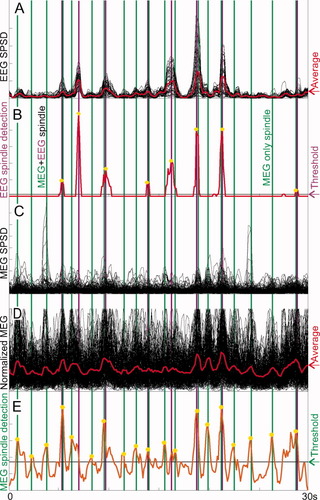
While sleep spindles are traditionally viewed as synchronous brain-wide events, this research demonstrates they actually emerge from a much more dynamic, focal process. Most spindles begin as localized, asynchronous oscillations-detectable only by MEG—before recruiting a "critical mass" of cortical surface area to finally appear as a synchronous wave on the EEG. Essentially, MEG captures the private, early "spark" of a spindle in specific brain regions, whereas EEG records the eventual "forest fire" of global synchronization that follows about 200 milliseconds later.
Links
BibTeX tap to expand
@article{Dehghani_spindleAsync_2011,
author = {Dehghani, Nima and Cash, Sydney S. and Halgren, Eric},
title = {Emergence of synchronous EEG spindles from asynchronous MEG spindles},
journal = {Human Brain Mapping},
volume = {32},
number = {12},
pages = {2217-2227},
keywords = {synchrony, cortex, thalamus, inverse solution, oscillation, human, sleep, matrix, core, thalamic reticular nucleus, alpha},
doi = {https://doi.org/10.1002/hbm.21183},
url = {https://onlinelibrary.wiley.com/doi/abs/10.1002/hbm.21183},
eprint = {https://onlinelibrary.wiley.com/doi/pdf/10.1002/hbm.21183},
year = {2011}
}
Code & Data
The room
Abstract
Sleep spindles are bursts of rhythmic 10–15 Hz activity, lasting ∼0.5–2 s, that occur during Stage 2 sleep. They are coherent across multiple cortical and thalamic locations in animals, and across scalp EEG sites in humans, suggesting simultaneous generation across the cortical mantle. However, reports of MEG spindles occurring without EEG spindles, and vice versa, are inconsistent with synchronous distributed generation. We objectively determined the frequency of MEG-only, EEG-only, and combined MEG-EEG spindles in high density recordings of natural sleep in humans. About 50% of MEG spindles occur without EEG spindles, but the converse is rare (∼15%). Compared to spindles that occur in MEG only, those that occur in both MEG and EEG have ∼1% more MEG coherence and ∼15% more MEG power, insufficient to account for the ∼55% increase in EEG power. However, these combined spindles involve ∼66% more MEG channels, especially over frontocentral cortex. Furthermore, when both MEG and EEG are involved in a given spindle, the MEG spindle begins ∼150 ms before the EEG spindle and ends ∼250 ms after. Our findings suggest that spindles begin in focal cortical locations which are better recorded with MEG gradiometers than referential EEG due to the biophysics of their propagation. For some spindles, only these regions remain active. For other spindles, these locations may recruit other areas over the next 200 ms, until a critical mass is achieved, including especially frontal cortex, resulting in activation of a diffuse and/or multifocal generator that is best recorded by referential EEG derivations due to their larger leadfields.
Citing
If you use this code or build on these ideas, please cite the paper using the BibTeX entry above.
Doors · concepts in this room
Related rooms
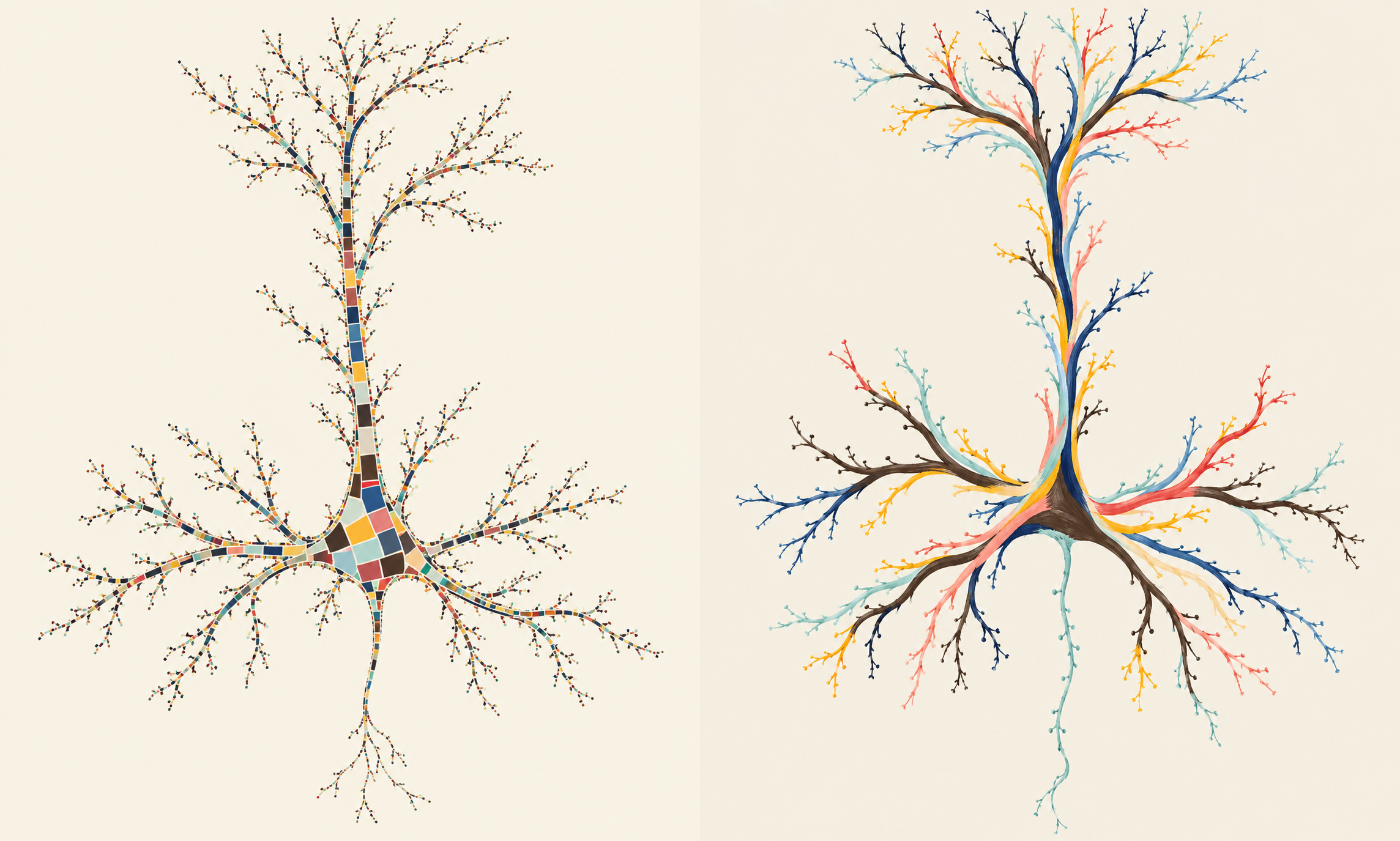
How Long Is the Coast of a Neuron? Resolution-Dependent Interaction Order and Computational Capacity
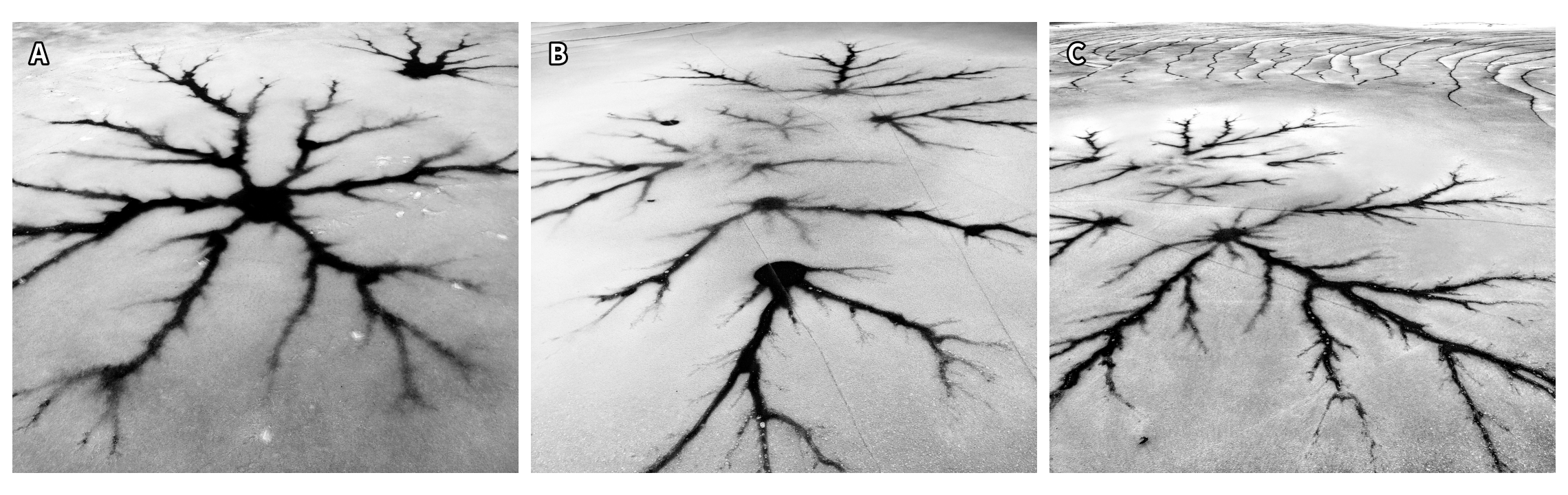
Field closure, ice neurons, and when a dendrite is a motif